

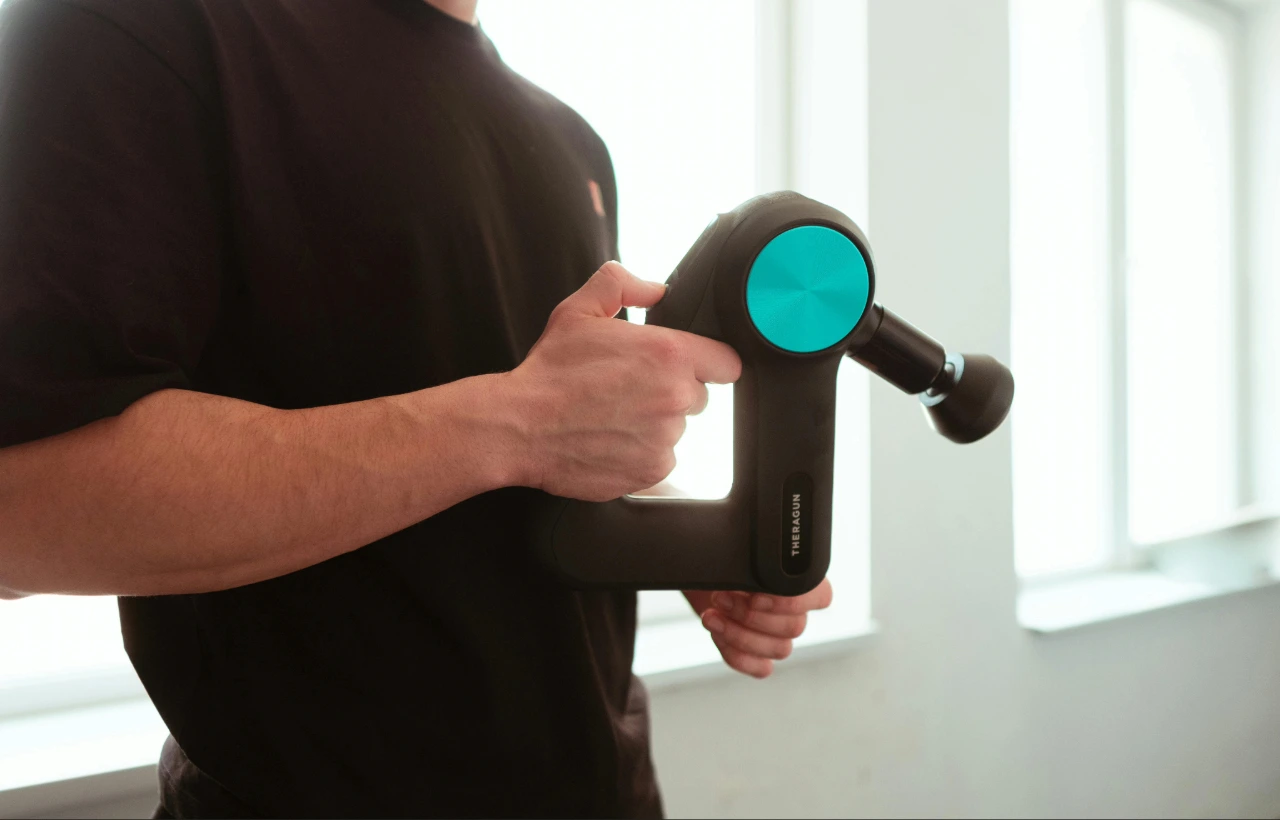
If you run regularly - whether you’re building back from a break, chasing a PB, or stacking mileage for a marathon - your legs do a lot of repetitive work. A good massage gun (also called a percussion massager) can be a practical recovery tool: it helps you relax tight-feeling muscles, reduce that “heavy legs” sensation after harder sessions, and make it easier to move well between runs. It’s not magic, and it won’t “flush lactic acid” (that’s not really how soreness works), but used well it can be a genuinely useful part of your post-run routine.
This guide covers what runners should look for, how to use a massage gun safely, and a curated list of the best options across budgets and needs. Travel-friendly minis, powerful “do-it-all” models, and value picks that get the job done.
What a massage gun actually does for runners
Massage guns work by delivering rapid, small-amplitude pulses into soft tissue, a method commonly referred to as percussive therapy. For runners, their value lies less in dramatic physiological change and more in how they influence comfort, movement, and perception after training.
Most runners notice a short-term reduction in tightness after using a massage gun, particularly in heavily worked areas like the calves, quads, glutes, and the soles of the feet. That immediate “lighter” or looser feeling can be especially welcome after harder sessions or long runs. Used lightly, massage guns can also make it easier to move through a fuller range of motion before mobility work or strength training, helping stiff legs feel more cooperative rather than forced.
There’s also a perceived reduction in soreness for some runners, particularly when massage gun use becomes a consistent post-run habit rather than a one-off fix. While this doesn’t mean muscle damage is being reversed, it can make the days between sessions feel more manageable, which matters when you’re stacking training.
What massage guns don’t reliably do is just as important. They don’t meaningfully “break up scar tissue,” they don’t fix tendon pain (and can aggravate it if used aggressively), and they don’t replace the fundamentals of recovery: sleep, sensible training load, adequate fueling, and strength work.
The most useful way to think about a massage gun is as a recovery accessory. It’s a tool that can help you feel better and move more freely, particularly when training frequency increases, but it works best as part of a bigger picture rather than as a standalone solution.
How to choose the right massage gun for running recovery
Choosing a massage gun can feel overwhelming because manufacturers highlight different specs, often without much context. For runners, a few key factors matter far more than marketing numbers.
Power is a good example. Brands often emphasise speed, measured in percussions per minute, but stall force - the amount of pressure the gun can handle before it stops - is usually more relevant. Higher stall force means the device can maintain performance on dense areas like the glutes and quads without bogging down. Larger runners, very muscular runners, or anyone who prefers firmer pressure will generally benefit from higher stall force.
Amplitude, or stroke length, refers to how far the massage head moves with each pulse. Shorter amplitudes in the 8–10mm range tend to feel gentler and are well suited to sensitive users, smaller muscle groups, and travel-sized devices. The 12–14mm range is a sweet spot for most runners, offering effective stimulation without feeling overwhelming. Amplitudes of 16mm or more can feel intense and are best reserved for those who know how to use them with good technique.
Attachments matter less than most people think, but the right few make a difference. A ball head works well for most large muscle groups. Flat heads are useful for broader pressure across areas like the quads. Bullet or cone heads allow for more precise work around hips or smaller areas but are easy to overdo. Fork attachments can be helpful around the calf and Achilles region, provided you avoid direct pressure on the tendon itself.
Noise is often overlooked until you start using the device regularly. If you plan to use a massage gun while watching TV or in shared spaces, quieter motors and good vibration damping make a noticeable difference.
Ergonomics also matter more than specs. Runners can easily reach calves and quads, but hamstrings and glutes are harder to access solo. Lighter devices, angled handles, and good grip texture all help. If you regularly struggle to reach hips or upper hamstrings, handle design can matter more than raw power.
Battery life doesn’t need to be extreme. Claims are often optimistic, but if you’re using a massage gun for ten minutes a day, even an average battery will usually suffice. USB-C charging is increasingly common and makes life easier when travelling.
Finally, durability and support are underrated. Massage guns take repeated mechanical stress, and a strong warranty or accessible replacement parts can matter more over time than an extra attachment or two.
The best massage guns for post-run recovery
Rather than thinking in terms of strict price brackets, it’s more helpful to think in terms of use cases. The options below reflect how runners actually use massage guns day to day.
Best overall for most runners: Therabody Theragun Prime (or Prime Plus)
%20(1).png)
Therabody has been in the space long enough to refine the essentials, and the Theragun Prime reflects that maturity. It offers enough power to handle large muscle groups like the glutes and quads, without becoming overly complex or aggressive. The overall feel is solid and controlled, making it easy to use consistently rather than sporadically.
It’s the kind of device that fits into a routine without demanding too much thought. If you want one massage gun that will reliably cover most recovery needs for years, this is a sensible choice.
Pros
- Strong, consistent performance for major muscle groups
- Simple, reliable design
- Good ecosystem for guided routines
Cons
- Premium price compared to some competitors
- Triangular handle isn’t universally loved
Best for runners who want a dependable, long-term option they can use regularly.
Best premium pick: Therabody Theragun Pro
.webp)
For runners who approach recovery with the same intent as training, the Theragun Pro offers maximum capability. It delivers powerful, consistent output and is built to withstand frequent, long-term use. This is a device designed to be used often, not just after the occasional hard session.
For many runners, it’s more than they strictly need, but for high-mileage athletes or households with multiple users, that extra durability and power can make sense.
Pros
- Excellent power for dense muscle groups
- Built for frequent, heavy use
- Broad feature set and attachments
Cons
- High cost
- Overkill for more casual use
Best for high-mileage runners, multi-sport athletes, or shared households.
Best value all-rounder: Hyperice Hypervolt (or Hypervolt 2)
.webp)
The Hypervolt range focuses on smoothness and usability. Rather than feeling aggressive, the vibration feels controlled and comfortable, which many runners prefer for calves and quads after tough sessions. It’s effective without being intimidating, making it easier to use consistently.
This is a strong choice for runners who want premium build quality and performance, but prefer a gentler feel.
Pros
- Smooth, comfortable vibration
- Generally quieter than similarly powerful devices
- Versatile for daily recovery
Cons
- Less “punchy” than top-end competitors
- Accessories vary by model
Best for runners who value comfort and ease of use over maximum intensity.
Best mini for travel and gym bags: Therabody Theragun Mini (2nd gen)
.webp)
Smaller massage guns are often the ones that actually get used, simply because they’re always within reach. The Theragun Mini is compact enough to live in a gym bag or suitcase, yet still offers enough power for light-to-moderate recovery work.
It’s ideal for post-run calf work, gentle foot stimulation, or loosening hips before an easy run while travelling. It won’t replace a full-size device, but it doesn’t try to.
Pros
- Highly portable and easy to carry
- Enough power for quick recovery sessions
- Encourages consistent use
Cons
- Limited reach for glutes and hamstrings
- Not suited to deep pressure work
Best for frequent travellers and runners who want recovery on the go.
Best mini alternative: Hyperice Hypervolt Go
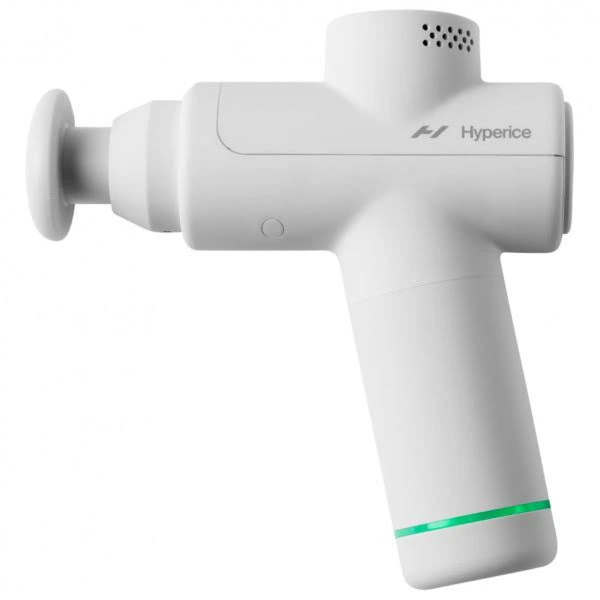
If you like the Hyperice feel but want something compact, the Hypervolt Go is a simple, travel-friendly option. It’s easy to live with, relatively quiet, and well suited to light, regular use rather than intense sessions.
Pros
- Compact and user-friendly
- Smooth, quiet operation
- Good for light recovery
Cons
- Less power than full-size models
- Limited reach
Best for runners who want a small, unobtrusive recovery tool.
Best budget pick: Renpho (midrange models)
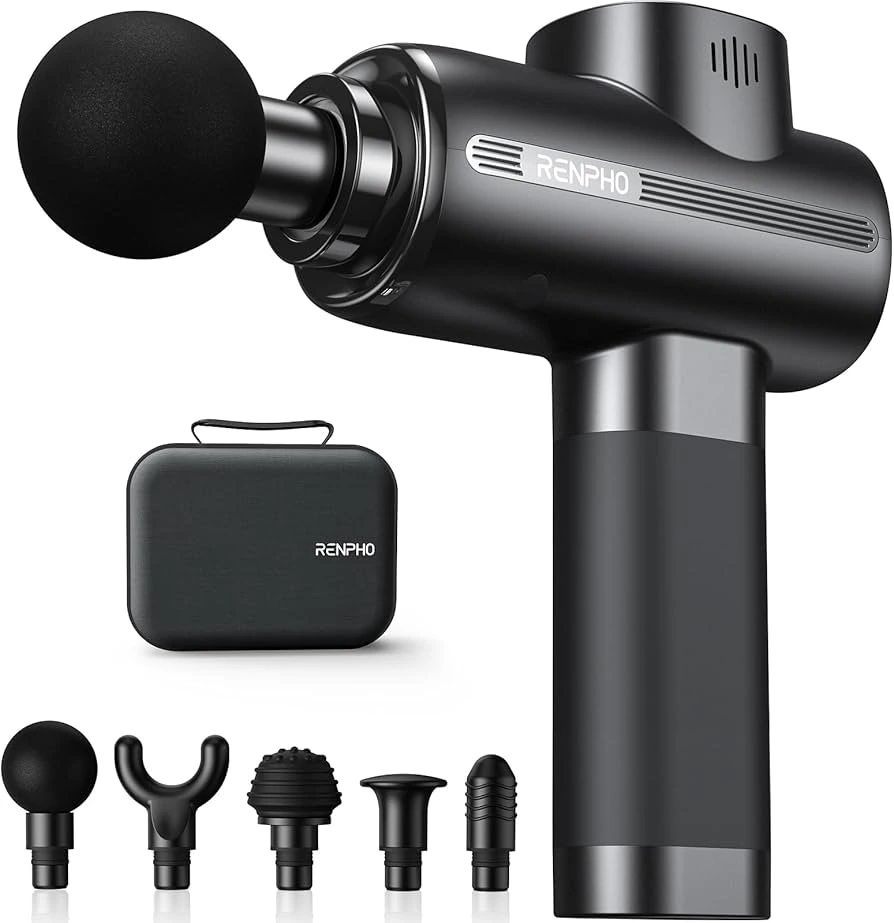
Renpho massage guns focus on accessibility. They don’t offer the refinement or long-term durability of premium brands, but they provide noticeable relief at a much lower cost. For many runners, that’s enough.
They’re a practical entry point into percussive therapy, particularly if you’re unsure how much you’ll use one.
Pros
- Strong value for the price
- Often includes multiple attachments
- Widely available
Cons
- Louder than premium options
- Durability can vary
Best for newer runners or anyone testing whether a massage gun fits their routine.
Best for quiet recovery: Ekrin Athletics (e.g. Ekrin B37)
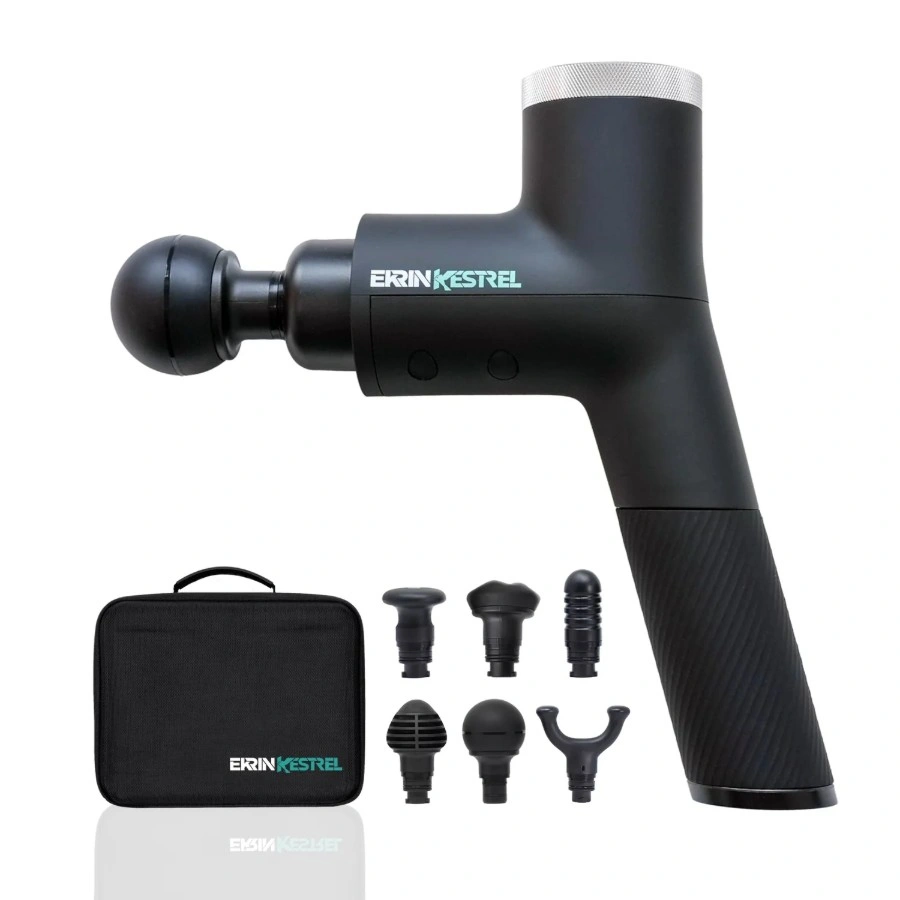
Ekrin devices tend to balance power, ergonomics, and noise particularly well. They feel thoughtfully designed, with comfortable handles and enough power to be effective without feeling harsh. For runners who use a massage gun in the evenings or shared spaces, that quieter operation can be a deciding factor.
Pros
- Quieter operation
- Comfortable, practical design
- Balanced power
Cons
- Less brand recognition
- Fewer ecosystem features
Best for runners who value quiet, controlled recovery sessions.
How runners should use a massage gun (without making soreness worse)
The most common mistake with massage guns is using too much pressure for too long. More intensity isn’t better, particularly after hard sessions when tissue is already irritated.
A simple post-run routine of around eight to twelve minutes is usually enough. Using a low-to-medium setting, spend about a minute per muscle group, moving slowly rather than pinning the head in one place. Calves, quads, hamstrings, and glutes cover most needs. Gentle, brief work on the soles of the feet can help some runners, but only at very low intensity.
Before runs, massage guns can be used briefly to stimulate tissue rather than relax it. Short bursts of twenty to thirty seconds on calves, quads, and glutes can help legs feel more awake before dynamic mobility and strides.
Good technique matters. Keep the head moving, avoid tendons and bony areas, and stop if sensations become sharp or numb. Massage guns aren’t meant to hurt.
Who should be cautious
Massage guns are generally safe for healthy runners, but caution is needed with acute injuries, suspected stress fractures, clotting issues, significant swelling, neuropathy, or recent surgery. If something feels wrong, it’s a signal to stop rather than push through.
Massage gun vs foam roller

Foam rollers and massage guns aren’t competitors, they’re complementary. Foam rollers are inexpensive, durable, and excellent for slower, broader pressure. Massage guns are quicker, easier to target, and often more comfortable, especially for daily use.
If you already foam roll consistently and enjoy it, you may not need a massage gun. If rolling feels like a chore, a massage gun can be the tool that makes recovery something you actually do.
Final take
For post-run recovery, the best massage gun is the one you’ll use consistently, gently, and intelligently. For most runners, a midrange, do-it-all model paired with a simple post-run routine is more than enough. Minis make sense if you travel often, and premium devices are worth considering if you’re training at high volume and value durability.
Ready to take the next step with your running?
Whether you're aiming for your first finish line or chasing a new PB, our expert-led training plans can help you train smarter and stay consistent. Explore our 5K, 10K, half marathon and marathon training plans to find the right fit for your goal.


.webp)
.webp)
.webp)
.webp)