Marathons are usually associated with running: finish times, world records, training plans, and race-day pace charts. But not everyone covers 26.2 miles at a run. Many people choose to walk a marathon, whether as a personal challenge, a charity goal, or part of a run/walk strategy.
Walking a marathon is still a huge endurance achievement. It requires time, preparation, and patience, and it raises an obvious question:
How long does it take to walk a marathon?
The answer depends mainly on your walking pace, but we can give some clear estimates.
The average time to walk a marathon
A marathon is 26.2 miles (42.2 km). Most adults walk at an average pace of around 3 miles per hour, which works out to about 20 minutes per mile.
At that pace, walking a full marathon would take approximately:
8 hours and 45 minutes
That’s a useful benchmark, but it’s only an average. Some walkers finish faster, while others take longer depending on conditions and experience.
Marathon walking times by pace
Here are some realistic finish-time estimates based on different walking speeds:
- 15 min/mile pace (very brisk): ~6 hours 33 minutes
- 18 min/mile pace (fast walk): ~7 hours 52 minutes
- 20 min/mile pace (average brisk walk): ~8 hours 44 minutes
- 22 min/mile pace (steady walk): ~9 hours 36 minutes
- 25 min/mile pace (slower pace): ~10 hours 55 minutes
For most people, walking a marathon will fall somewhere in the 7–10 hour range.
What affects how long it takes?
Walking 26.2 miles is very different from walking for an hour or two. Several factors can influence your pace over such a long distance.
Course terrain
A flat road marathon will usually allow a quicker walking pace than a hilly or trail-based course. Long climbs and technical terrain can add significant time.
Fatigue over time
Most walkers naturally slow down in the later miles as their legs tire and maintaining pace becomes harder.
Weather conditions
Heat, wind, rain, or cold can all affect performance, especially over an event lasting most of the day.
Breaks and stops
Bathroom stops, aid stations, blisters, and rest breaks all add up. Even short pauses can increase your total finish time.
Marathon cut-off times for walkers
One practical consideration for marathon walkers is the event’s official cut-off time.
Many large city marathons have cut-offs around 6–8 hours, though some are stricter. That means walking the entire way may not always be possible unless you’re moving at a fast pace or using some running intervals.
If you’re interested in walking a marathon, it’s worth choosing a walker-friendly event or one with extended support times.
Can you walk a marathon with a run/walk strategy?
Yes, and it’s a popular approach.
A run/walk method (sometimes called Jeffing) involves alternating short running intervals with walking breaks. This can help you:
- Maintain a higher overall pace
- Reduce fatigue compared to continuous running
- Stay within race cut-off times
- Break the distance into manageable chunks
For many first-time marathoners, run/walk is one of the most sustainable ways to complete the distance.
How to prepare for walking a marathon
Walking may be lower impact than running, but a marathon is still a major endurance event. You can’t expect to walk 26.2 miles comfortably without training.
A good preparation plan includes:
Building time on your feet
Gradually increase your long walks over several months, aiming to spend multiple hours walking comfortably.
Increasing weekly volume
Just like marathon running, marathon walking requires consistency. More frequent shorter walks can be just as valuable as one long session.
Strength and mobility work
Long-distance walking places stress on your feet, calves, hips, and lower back. Strength training helps reduce injury risk.
Practising fueling and hydration
Even though walking burns slightly fewer calories than running, you’ll be moving for much longer. Most walkers still need carbohydrates, fluids, and electrolytes during the event.
Wearing the right shoes
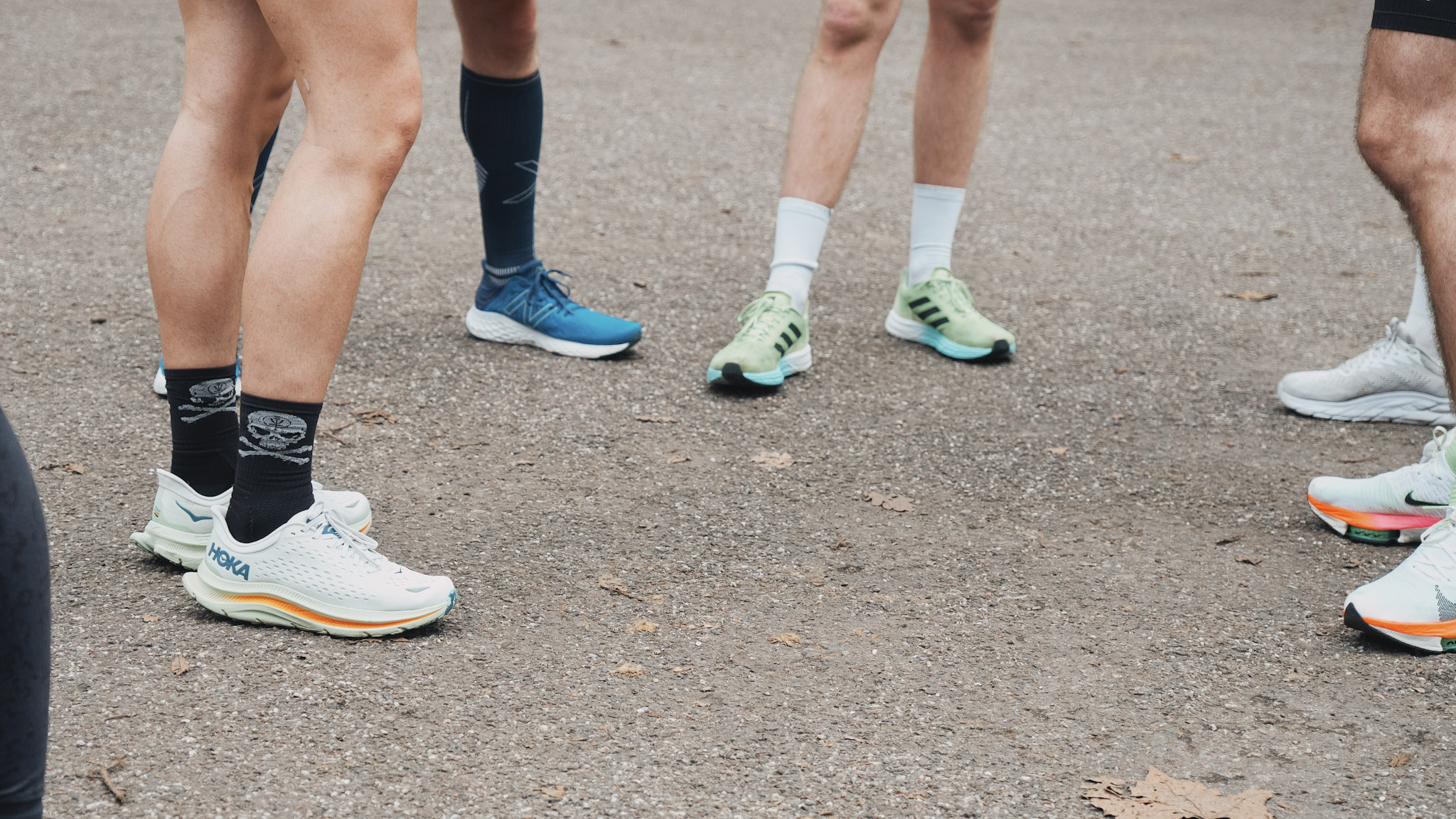
Comfort matters enormously when you’re covering 26 miles. Supportive shoes, tested socks, and blister prevention are essential.
The bottom line
For most people, walking a marathon takes around 8 to 10 hours, with an average brisk pace finishing in about 8 hours and 45 minutes.
Walking a marathon is still an impressive endurance accomplishment, and with the right preparation, pacing, and strategy, it’s an achievable goal for many.
Ready to take the next step with your running? Whether you're aiming for your first finish line or chasing a new PB, our expert-led training plans can help you train smarter and stay consistent. Explore our 5K, 10K, half marathon and marathon training plans to find the right fit for your goal.


.webp)