

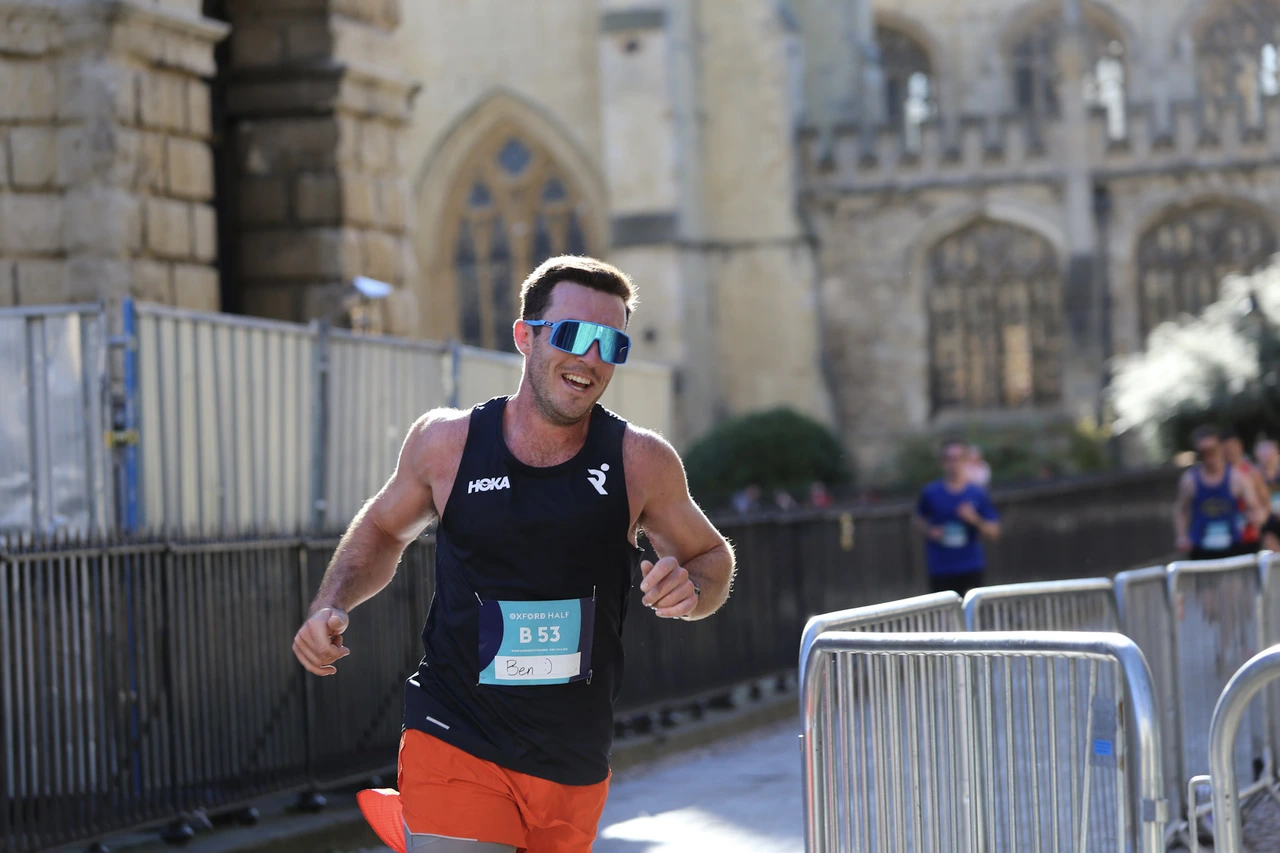
Getting faster is one of the most common goals in running, but it’s also one of the most misunderstood.
Most runners assume that to run faster, you simply need to try harder or push the pace more often. In reality, your body naturally settles into an “efficient” speed: the pace that conserves energy best. That’s great for survival, but not so helpful if you’re chasing a PB.
Improving speed, then, is about gently nudging your body out of that comfort zone and teaching it to operate more efficiently at higher intensities.
Why You Might Not Be Getting Faster
A common issue is doing the same type of run over and over again. If every run sits at a similar pace and effort, your body adapts, and then stops improving.
There’s also a mental side. Running faster can feel uncomfortable, and if you never expose yourself to that feeling in a controlled way, it’s hard to access it on race day.
And sometimes it’s simply a lack of variety. Sticking to flat routes, avoiding strength work, or skipping cross-training can all limit your potential.
Introducing Speed the Right Way
If you want to get quicker, at some point you do need to run faster, but that doesn’t mean sprinting flat out every session.
A good place to start is adding one faster session per week. This might include intervals at a pace quicker than your usual runs, with recovery in between. Over time, this helps your body adapt to moving efficiently at higher speeds.
It’s important to ease into this. Begin with shorter efforts and gradually build up the total amount of faster running as your body adapts.
Why Strides Are So Effective
One of the simplest and most underrated ways to improve speed is by adding strides.
Strides are short, controlled bursts of faster running where you gradually accelerate, hold a quick pace briefly, then ease back down. They’re not all-out sprints. Instead, they teach your body how to move fast while staying relaxed.
Because they’re short and controlled, they improve your running mechanics and coordination without putting too much strain on your body. Over time, this helps make faster paces feel more natural.
Building Strength Through Hills
Hills are another powerful tool. Running uphill forces your muscles to work harder, building strength in your legs and improving your running form.
You don’t need to turn every run into a hill session, but setting aside time to focus on them can pay off. A simple approach is to run up a hill at a steady, challenging effort, then recover on the way down.
This kind of training builds power, which translates into better speed on flat ground.
Don’t Overlook Cross-Training
Running isn’t the only way to become a better runner.
Activities like cycling can strengthen similar muscle groups while reducing impact on your joints. This allows you to build fitness and strength without adding more stress from running.
It’s a useful way to support your training, especially if you’re increasing volume or trying to avoid injury.
Small Changes That Make a Difference
Sometimes, the gains come from subtle tweaks rather than big changes.
Running with others who are slightly faster can naturally push your pace without overthinking it. Even something like listening to music with a quicker rhythm can encourage a faster stride rate.
These aren’t magic fixes, but they can help nudge your body towards running faster more efficiently.
The Bottom Line
Speed doesn’t come from hammering every run. It comes from a mix of smart training, consistency, and patience.
Introduce some faster work, keep most of your running controlled, and give your body time to adapt. Over time, what once felt fast will start to feel normal, and that’s when real progress happens.
Ready to take the next step with your running? Whether you're aiming for your first finish line or chasing a new PB, our expert-led training plans can help you train smarter and stay consistent. Explore our 5K, 10K, half marathon and marathon training plans to find the right fit for your goal.



.webp)