.webp)
A maratona sempre foi mais do que só uma corrida. É um teste de paciência, coragem e movimento incessante ao longo de 42,2 km. Todo corredor que chega na linha de partida tem a mesma dúvida: qual é a velocidade máxima que um ser humano consegue atingir nessa distância?
Ao longo dos anos, essa pergunta levou os atletas a limites incríveis, e os resultados mudaram o que achávamos que era possível. Hoje, os tempos mais rápidos já registrados em maratonas não são só conquistas de atletas. São momentos que mostram o limite da resistência humana.
A Arte da Maratona
O que torna esses desempenhos tão incríveis não é só a velocidade. É a precisão. Pra bater um recorde de maratona, você precisa de:
- Ritmo perfeito
- Capacidade aeróbica incrível
- Anos de treino disciplinado
- Resiliência mental quando a fadiga aparece
A margem para erro é mínima. Comece rápido demais e você vai acabar perdendo fôlego no final. Se você demorar muito, a chance vai embora. Quando tudo se encaixa, como o condicionamento físico, as condições, a estratégia e a coragem, a maratona se torna algo incrível. É uma corrida não só contra os concorrentes, mas também contra os limites do que a gente é capaz de fazer.
O tempo mais rápido de sempre numa maratona (homens)
.webp)
O recorde mundial oficial da maratona masculina é de incríveis 2:00:35. Estabelecido por Kelvin Kiptum na Maratona de Chicago de 2023, esse desempenho aproximou a maratona mais do que nunca da barreira antes inimaginável das duas horas.
Para entender o quão incrível isso é, pense no ritmo necessário:
- 4:36 por milha
- 2:52 por quilômetro
Durante os 42,2 km inteiros! Isso quer dizer que:
- Um ritmo de 5 km em 14:26
- Uma meia maratona com tempo parcial de 59:47
- Cada quilômetro corrido em menos de 4 minutos e 40 segundos
Pra maioria dos corredores, esse ritmo seria super rápido pra uma corrida de 1,6 km. Kiptum aguentou por mais de duas horas. Um ritmo de velocidade e resistência que está entre os maiores desempenhos da história do esporte.
O sonho de menos de duas horas: quebrando a barreira
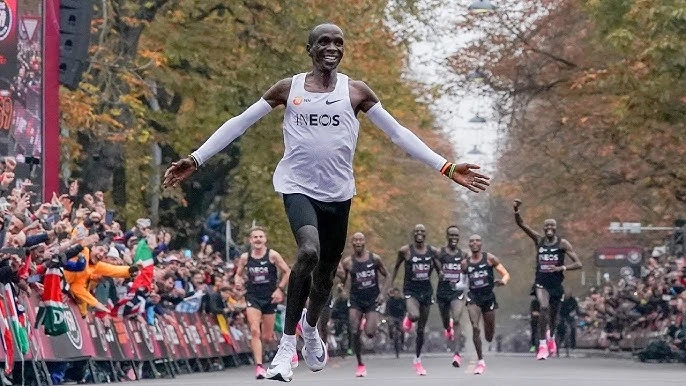
Durante décadas, os corredores se perguntaram se uma maratona poderia ser concluída em menos de duas horas. Em 2019, esse sonho ficou mais perto do que nunca quando Eliud Kipchoge correu 1:59:40 durante o INEOS 1:59 Desafio em Viena.
Foi a primeira vez que alguém correu 42 km em menos de duas horas. Mas, esse desempenho não conta como um recorde mundial oficial porque o evento usou condições controladas, feitas especialmente para aumentar a velocidade, incluindo:
- Equipes rotativas de pacemakers
- Um ambiente de corrida controlado
- Um percurso cuidadosamente otimizado
Mesmo assim, a corrida mudou a forma como pensamos sobre resistência. Kipchoge não só quebrou uma barreira, como provou que ela podia ser quebrada.
O tempo mais rápido de sempre numa maratona (mulheres)
.webp)
O recorde mundial da maratona feminina é da Tigst Assefa, que fez um desempenho inesquecível na Maratona de Berlim de 2023. O tempo dela: 2:11:53
Isso quer dizer que:
- 5:02 por milha
- 3:07 por quilômetro
Pra dar uma ideia, muitos corredores competitivos de clubes teriam dificuldade em manter essa velocidade durante uma única corrida de 5 km, mas Assefa conseguiu mantê-la durante toda a maratona. Foi uma corrida que não só bateu recordes, como superou todas as expectativas.


.webp)