

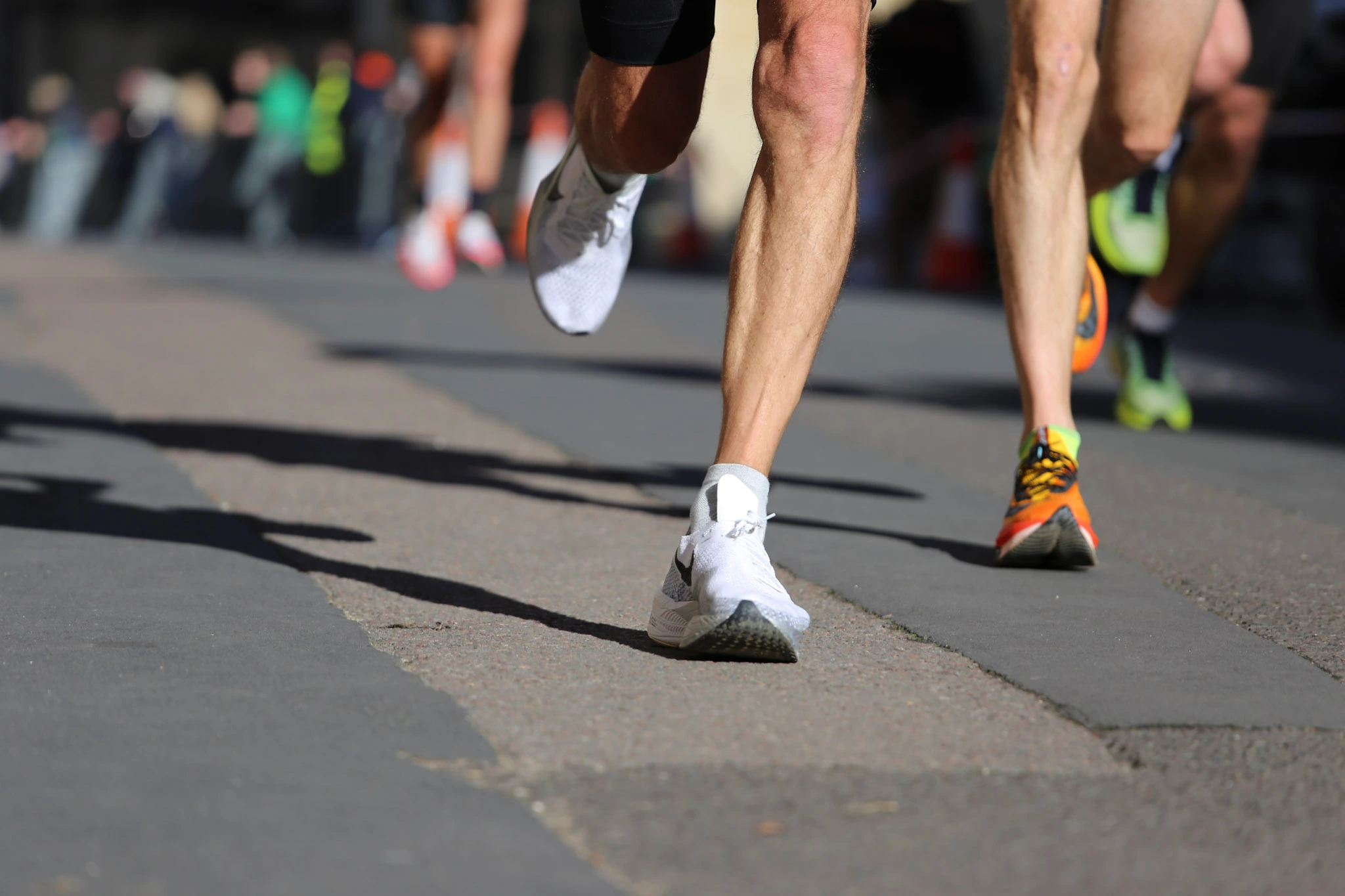
Courir sous la pluie peut être étrangement satisfaisant, jusqu'à ce que vos pieds soient trempés, que vos chaussettes soient détrempées et que chaque pas semble plus lourd que le précédent.
Les chaussures de course entièrement imperméables constituent une solution, mais elles sont souvent plus coûteuses que les baskets standard. Si vous n'êtes confronté à des conditions humides qu'occasionnellement, l'achat d'une paire adaptée à ces conditions météorologiques pourrait ne pas sembler justifié.
La bonne nouvelle ? Il n'est pas nécessaire d'acquérir une nouvelle paire de chaussures imperméables pour rester au sec. Il existe plusieurs solutions efficaces pour protéger vos pieds dans des conditions humides.
Voici comment imperméabiliser vos chaussures de course (ou du moins les rendre beaucoup plus résistantes à l'eau), en fonction de votre climat et de vos besoins.
Option 1 : Utilisation de guêtres de course
Idéal pour : Pluie légère, herbe humide, sentiers boueux et éclaboussures.
Les guêtres de course sont des couvre-chaussures légers qui s'attachent autour de la cheville et se fixent à la chaussure. Ils ne rendent pas vos chaussures imperméables, mais ils empêchent l'eau, la boue et les débris de pénétrer par le haut.
Ils sont particulièrement utiles si :
- Vous courez à travers des broussailles humides.
- Il s'agit davantage d'une bruine que d'une pluie abondante.
- La majeure partie de l'eau provient des éclaboussures ou de la végétation.
Le principal avantage est la respirabilité. Vos chaussures de course peuvent toujours évacuer la chaleur, et les guêtres sont faciles à enfiler et à retirer pendant la course.
La restriction ? Si vous marchez dans une flaque d'eau suffisamment profonde pour submerger votre chaussure, votre pied sera tout de même mouillé. Les guêtres offrent une protection vers le haut, mais pas vers le bas.
Option 2 : Utilisation de chaussettes imperméables
Idéal pour : Les courses par temps froid et humide, où la chaleur et la sécheresse des pieds sont plus importantes que le poids des chaussures de course.
Les chaussettes imperméables sont conçues avec une structure en couches : généralement un tissu extérieur, une membrane imperméable au milieu et une doublure intérieure douce au contact de la peau. Considérez-les comme de mini-imperméables pour vos pieds.
L'avantage est simple : même si vos chaussures sont mouillées, vos pieds restent au sec.
Ils sont particulièrement efficaces pour :
- Course à pied en hiver
- Longues courses sous la pluie
- Traversées de ruisseaux
- Conditions de neige ou de neige fondante
Le compromis est le volume. Les chaussettes imperméables sont plus épaisses et moins respirantes que les chaussettes de course classiques. Ils empêchent également l'eau de pénétrer par le haut. Par conséquent, les associer à des guêtres peut améliorer leur performance en cas de forte pluie.
Si vous résidez dans une région humide mais qui n'est pas constamment inondée, les chaussettes imperméables constituent l'une des solutions les plus fiables et les plus pratiques.
Option 3 : Utiliser un spray imperméabilisant
Idéal pour : Protection abordable et occasionnelle contre les intempéries.
Si vous préférez traiter les chaussures elles-mêmes, les sprays imperméabilisants constituent l'option la plus simple à réaliser soi-même. Ils ne transformeront pas vos baskets standard en modèles entièrement imperméables, mais ils peuvent leur apporter une résistance significative à l'eau.
Ces sprays agissent en recouvrant les fibres du tissu et en aidant l'eau à perler au lieu de s'imprégner.
Quelques points importants :
- Veuillez utiliser un spray adapté aux tissus et aux matières synthétiques convient aux chaussures de course.
- Évitez les traitements à la cire lourde, sauf si vos chaussures sont en cuir.
- Veuillez vous attendre à devoir renouveler votre demande périodiquement.
Le spray imperméabilisant est idéal si :
- Vous courez sous une pluie légère à modérée.
- Vous souhaitez prolonger la durée de vie de vos chaussures plus anciennes.
- Il est déconseillé d'investir dans une deuxième paire.
Veuillez noter que les chaussures de course standard ne sont généralement pas équipées de languettes renforcées (fixées), de sorte que l'eau peut toujours s'infiltrer autour des lacets, même si la tige repousse bien l'humidité.
Comment imperméabiliser des chaussures de course à l'aide d'un spray (étape par étape)
Durée totale : environ 30 minutes
Temps de séchage : 24 heures
1. Veuillez retirer les lacets.
Veuillez retirer les lacets avant de vaporiser. Les traitements imperméabilisants peuvent les rigidifier et affecter leur capacité à se nouer.
2. Nettoyez soigneusement les chaussures.
Veuillez utiliser un savon doux et de l'eau tiède pour éliminer la terre, la boue et les débris. Le spray imperméabilisant est plus efficace sur des matériaux propres.
Veuillez éviter les détergents agressifs qui laissent des résidus, car ils peuvent réduire l'efficacité du produit.
3. Veuillez rincer et laisser les chaussures légèrement humides.
De nombreux traitements imperméabilisants adhèrent mieux aux tissus humides. Veuillez suivre les instructions fournies avec votre spray spécifique.
4. Veuillez appliquer le spray de manière uniforme.
Tenez le flacon à environ 15 cm et enduisez toute la partie supérieure. Veuillez accorder une attention particulière aux coutures et aux zones cousues.
Veuillez éviter la sursaturation. Il est important d'assurer une couverture complète, sans laisser de traces.
5. Veuillez essuyer l'excédent.
Veuillez utiliser un chiffon propre pour essuyer tout excès de spray.
6. Veuillez laisser sécher les chaussures à l'air libre.
Remplissez-les de papier journal ou utilisez un embauchoir pour conserver leur forme. Veuillez les laisser sécher pendant au moins 24 heures, à l'abri de la chaleur directe ou de la lumière du soleil.
Après séchage, l'eau devrait former des gouttelettes sur la surface plutôt que de s'imprégner.
Ce que l'imperméabilisation peut et ne peut pas accomplir
Il est essentiel de définir des attentes.
Bombe aérosol résistante à l'eau :
- Résiste à la pluie fine
- Réduire l'absorption des surfaces humides
- Prolongez la durée de vie de vos chaussures dans des conditions humides.
Il n'est pas possible de :
- Rendre les chaussures en maille entièrement imperméables
- Empêchez l'eau de pénétrer par le col de la cheville.
- Remplacer une membrane imperméable spécialement conçue
Si vous courez régulièrement sous une pluie abondante ou sur des sentiers humides, une chaussure imperméable adaptée pourrait être la meilleure solution à long terme.
Quelle option devriez-vous sélectionner ?
Si vous êtes principalement confronté à de la bruine ou à de l'herbe humide, les guêtres sont légères et respirantes.
Si le temps est froid et constamment humide, les chaussettes imperméables constituent le moyen le plus fiable de garder les pieds au sec.
Si vous recherchez une solution peu coûteuse et occasionnelle, le spray imperméabilisant constitue la méthode de bricolage la plus simple.
Pour les coureurs qui ne rencontrent que rarement des conditions météorologiques défavorables, la combinaison de plusieurs méthodes offre souvent le meilleur équilibre.
Remarque finale
Courir par temps humide peut être plus difficile que par temps sec. Par conséquent, si vous souhaitez développer votre endurance ou reprendre l'entraînement après une pause, veillez à ce que vos séances soient raisonnables et structurées.
Si vous suivez un programme, il est plus facile de s'adapter aux conditions météorologiques. Les programmes d'entraînement de Runna (y compris les programmes gratuits jusqu'à 5 km) vous aident à rester constant tout au long de l'année, sans excès.
Ready to take the next step with your running? Whether you're aiming for your first finish line or chasing a new PB, our expert-led training plans can help you train smarter and stay consistent. Explore our 5K, 10K, half marathon and marathon training plans to find the right fit for your goal.



.webp)