


Er komt een moment in de reis van elke hardloper dat het minder een hobby wordt en een deel van je lifestyle. Waar je gang vol staat met hardloopschoenen, je Runna app een prominente plaats inneemt op je huis en je droomt van je volgende PR. Maar ergens op deze reis zul je je realiseren dat je een hele nieuwe taal moet leren.
Maar maak je geen zorgen. We zijn allemaal wel eens overdonderd door het lingo van hardlopers. Maar met een beetje oefening heb je in een mum van tijd de taal van de hardlopers te pakken en spreek je die zo vloeiend dat je oude taalleraar er trots op zou zijn.
Dus of je nu precies probeert te onthouden wat een "negatieve split" betekent of een debat wilt winnen over wat VO2 max nu eigenlijk is, we hebben een handige gids samengesteld met 25 hardlooptermen voor beginners.
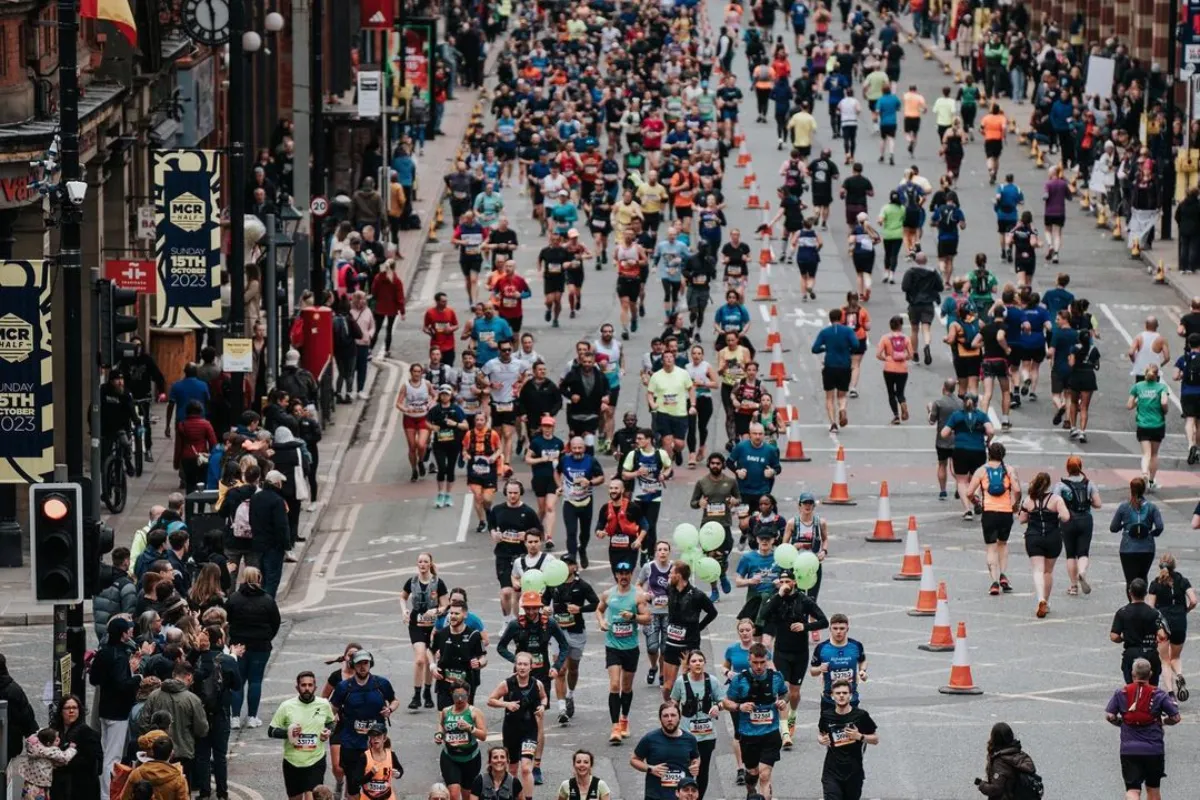
1. Afstand: Deze is zo voor de hand liggend als maar kan. Yepp. Het is heel eenvoudig de lengte van een race of de afstand van een bepaalde loop, of dat nu 5K, 10K, een halve marathon, marathon of iets anders is.
2. Tempo: Als je vrienden die ervaren hardlopers zijn hun tempo bespreken, hebben ze het over de snelheid waarmee ze liepen, meestal gemeten in minuten per mijl. As such, you can expect your pace to vary depending on the distance and terrain.
3. Cadans: Hierbij gaat het om het aantal stappen dat je per minuut zet als je op de stoepen loopt. Pro tip: A faster cadence can help improve your form and reduce the risk of injury.
4. VO2 Max: Taking you back to GCSE science, your VO2 max refers to either your maximum oxygen uptake or the amount of oxygen your body is able to use during a run. In principe is het doel van het spel om je VO2 max te verbeteren, omdat dat een trefzekere manier is om je hardloopprestaties te verbeteren. It’s also the first thing to decrease when you take a break from running.
5. Threshold: There is a point where your body switches from using primarily aerobic energy to embracing that anaerobic energy. This is called the threshold, and training near yours is one of the most effective ways of improving your endurance.
6. Hill Repeats: This one is like Ronseal – it does exactly what it says on the tin. Hierbij ren je meerdere keren een heuvel op en af om je kracht en uithoudingsvermogen te verbeteren. That’s what makes it such an epic form of training and the perfect preparation for a trail run or race.
7. Fartlek: [Insert chuckle here] The Swedish word for "speed play," a fartlek is a speedwork format that involves varying your pace during a run by alternating between fast and slow intervals for however long you want.
8. Interval training: Technically, interval training refers to the time spent recovering between speed segments. Maar de term wordt meestal gebruikt om te verwijzen naar het herhalen van korte inspanningen van hoge intensiteit gevolgd door perioden van rust of herstel van lage intensiteit, wat een geweldige trainingstechniek is voor iedereen die zijn snelheid en uithoudingsvermogen wil verbeteren.
9. Taper: In the build up to a race, especially long distance ones, there will be a period where you preserve your energy levels by reducing your training volume and intensity in the days and weeks prior. Zo kan je lichaam herstellen en op de dag zelf optimaal presteren.
10. Recovery Run: Recovery is the secret weapon of every experienced runner, and recovery runs are a part of that. In wezen zijn het langzame, rustige loopjes die je lichaam helpen herstellen van zwaardere trainingen en je aerobe conditie verbeteren.
11. Cross-Training: Any other type of exercise a runner might do to improve their condition, complement their training and improve overall fitness, such as strength training, cycling and swimming.
12. Stride: Strides are short, gradual bursts of acceleration of less than 30 seconds done at around 90% of your maximum speed that are used to improve running form and efficiency. Natuurlijk kan een enkele stap tijdens het hardlopen ook een pas worden genoemd, dus zorg ervoor dat je de context kent, anders raak je een beetje in de war.
13. PR or PB: These stand for Personal Record or Personal Best, referring to your fastest time over a given distance, such as 5K or marathon. We love a PR.
14. Negative Split: This is when you run the second half of a race or run faster than the first half, which can be a strategic approach to pacing your race.
15. Fueling: Eating and drinking before / during a run to maintain your energy levels and prevent dehydration. Om dat in de juiste context te plaatsen: de muur raken gebeurt vaak omdat je brandstof op is en koolhydraten nodig hebt die het lichaam kan omzetten in brandstof die de spieren kunnen gebruiken. Common fueling options include gels, sports drinks, and water.
16. Hydration: Nothing is more important than drinking enough fluids before, during, and after a run to prevent dehydration and allow your body to perform at its pique. Wat je persoonlijke hydratatiebehoeften betreft, die hangen af van factoren zoals temperatuur, vochtigheid, afstand en meer.
17. Compression: Wearing compression socks (or other garments) with the sole aim of improving your blood circulation, and reducing the chance of muscle soreness and fatigue.
18. Shoe Drop: The difference in height between the heel of and toe of a running shoe. Traditioneel hadden hardloopschoenen een grotere afzet, met een dikke, dempende hiel en een lagere, plattere teendoos. Maar de laatste jaren is er een grote verschuiving in de richting van schoenen met een lagere afzet, die een natuurlijkere voetafwikkeling bevorderen en mogelijk helpen om het risico op bepaalde blessures te verminderen.
19. Pronation: This refers to the natural inward rolling of your foot as it lands while you’re running. De reden dat dit tegenwoordig zo'n veelgebruikte term is, is dat sommige hardlopers overproneren, wat het risico op blessures kan vergroten.
20. DOMS: This stands for Delayed Onset Muscle Soreness, which is a feeling of discomfort in your muscles 1 to 3 days after a heavy workout. Dit hoeft niet te betekenen dat de training goed was, maar alleen dat je niet gewend bent aan dat intensiteitsniveau.
21. Rest Day: An essential part of every runner’s training plan, rest days are a chance to let your body adapt to the stress of training through sleep, nutrition and active recovery as a way to avoid overtraining and make significant progress.
22. Dynamic / Static Stretching: Dynamic stretching involves light, bouncy movements through the range of motion to warm up the body before running, whereas static stretches are where you hold a position at the end of your range. Waar je ook de voorkeur aan geeft, ze zijn een effectieve manier om strakke spieren te ontspannen aan het einde van een rondje hardlopen.
23. Carbo Load: Switching your macronutrient ratio to be more carbohydrate heavy in the days leading up to a race as a way to replenish your glycogen (energy) stores; something that can be incredibly beneficial for races beyond 90 minutes.
24. Cool-Down: The last part of a runner’s workout, the cool down has one goal and that’s to get your heart rate (and breathing) back to a more normal level. Wat je doet is een kwestie van persoonlijke voorkeur, maar meestal bestaat het uit een korte wandeling, misschien een lichte jog en wat dynamisch stretchen.
25. Het gevoel van pure euforie dat je tijdens of na het hardlopen krijgt als je hersenen natuurlijke chemicaliën in je lichaam vrijlaten. Van endorfine tot endocannabinoïden, dit gevoel maakt hardlopen zo verslavend.
Ready to take the next step with your running?
Whether you're aiming for your first finish line or chasing a new PB, our expert-led training plans can help you train smarter and stay consistent. Explore our 5K, 10K, half marathon and marathon training plans to find the right fit for your goal.



.webp)
.webp)
.webp)
.webp)