

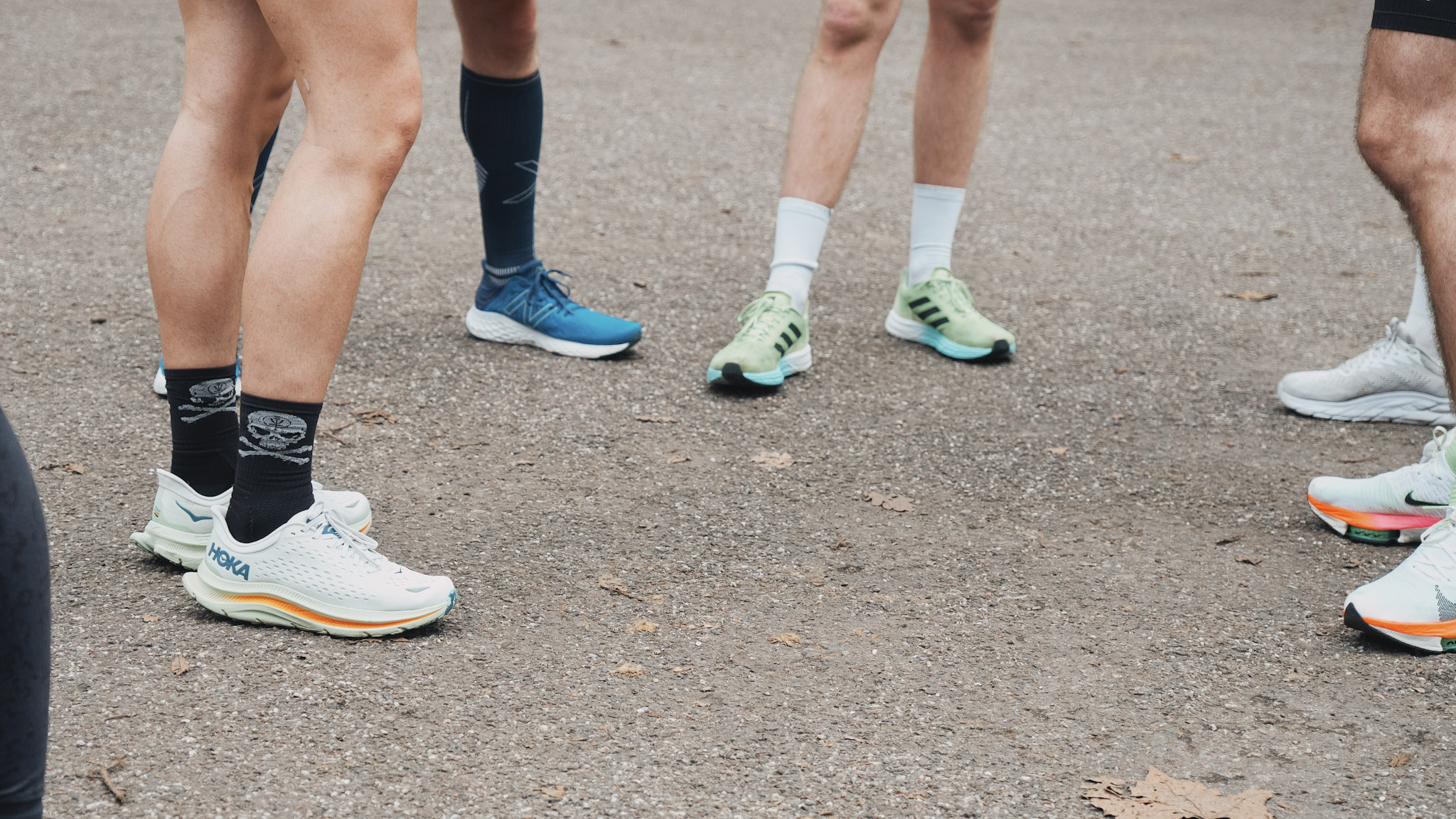
Laufschuhe zu kaufen kann sich irgendwie wie eine große Sache anfühlen. Es gibt hunderte Modelle, jede Marke hat ihre eigene Fachsprache, und man kann leicht in Listen mit den „besten Schuhen“ reingezogen werden, die nicht zu deinem Körper oder deiner Laufweise passen.
Besser ist es, es so zu sehen: Der beste Laufschuh ist einfach der, mit dem du bequem, regelmäßig und ohne Verletzungen laufen kannst. Das richtige Paar macht dich nicht auf magische Weise schneller, aber das falsche Paar kann jeden Lauf anstrengender machen, als er sein müsste.
So triffst du die richtige Wahl, ohne es zu kompliziert zu machen.
Fang mit den drei Sachen an, die wirklich wichtig sind
Die meisten Laufschuhe sind Variationen eines Themas. Wenn du das Marketing mal beiseite lässt, läuft deine Entscheidung auf drei Fragen hinaus:
- Passt es richtig?
- Fühlt es sich beim Laufen im Tempo bequem an?
- Passt das zu der Art von Laufen, die du meistens machst?
Wenn ein Schuh diese drei Punkte erfüllt, ist der Rest nur noch Detailarbeit.
Die Passform ist das Wichtigste, denn selbst der „beste“ Schuh bringt nichts, wenn er reibt, drückt oder dein Fuß darin rutscht. Komfort ist wichtig, weil du damit Tausende von Schritten machen wirst; du solltest nicht versuchen, sie durch Schmerzen „einzulaufen“. Und die Art des Laufens ist wichtig, weil derselbe Schuh sich bei lockeren Kilometern super anfühlen kann, bei schnellerem Training aber echt nervig sein kann (oder umgekehrt).
Sorg erst mal für die richtige Passform, bevor du über irgendwas anderes nachdenkst.
Ein Laufschuh sollte gut sitzen, ohne zu drücken. Die Ferse sollte fest sitzen, der Mittelfuß sollte sich gestützt anfühlen und deine Zehen sollten genug Platz haben, um sich auszubreiten.
Einfach zu checken: Wenn du in den Schuhen stehst, solltest du normalerweise etwa eine Daumenbreite Platz vor deinem längsten Zeh haben. Zu wenig Platz führt schnell zu schwarzen Zehennägeln und wunden Stellen, vor allem, wenn deine Füße bei längeren Läufen anschwellen.
Die Breite der Zehenkappe ist genauso wichtig wie die Länge. Wenn deine Zehen im Laden schon eingeengt sind, wird es nach 30 Minuten Laufen noch schlimmer. Wenn der Schuh vorne locker sitzt, dein Fuß beim Laufen aber nach vorne rutscht, kommt es zu Reibung. Du willst „Bewegungsfreiheit“ ohne „Spielraum zum Schwappen“.
Ein oft übersehener Tipp: Probier Schuhe am besten später am Tag an, wenn du kannst. Die Füße sind dann meistens etwas größer, was deine Größenangabe realistischer macht.
Kauf keine Schuhe, nur weil du „Unterstützung brauchst“.
Viele Läufer denken, dass sie Stabilitätsschuhe brauchen, wenn sie „überpronieren“, oder neutrale Schuhe, wenn sie das nicht tun. In der Praxis läuft's selten so glatt.
Stabilitätsschuhe können echt hilfreich sein, wenn du das Gefühl hast, nach innen zu knicken, und du mit einem geführten, stützenden Gefühl einfach besser zurechtkommst. Neutrale Schuhe sind super, wenn du ein natürlicheres Laufgefühl magst und keine Führung brauchst. Aber du willst keinen Schuh, der deine Bewegung behindert, sondern einen, der sie unterstützt: .
Wenn du dir nicht sicher bist, kann ein guter Laufsportladen hier echt hilfreich sein. Nicht, weil du eine perfekte „Gangdiagnostik“ brauchst, sondern weil du durch das Ausprobieren mehrerer Optionen hintereinander (neutral und stabilisierend, verschiedene Marken, verschiedene Formen) schnell herausfindest, was deinem Körper gut tut.
Such dir die Dämpfung so aus, wie du den Schuh wirklich nutzen wirst.
Dämpfung ist nicht einfach „gut“ oder „schlecht“, sondern kommt auf die Vorlieben und den Zweck an.
Wenn du meistens locker und gleichmäßig läufst, wirst du wahrscheinlich einen Schuh mit genug Dämpfung mögen, der Tag für Tag bequem ist. Wenn du Sessions mit hoher Geschwindigkeit magst oder etwas Spritzigeres suchst, findest du vielleicht ein leichteres, reaktionsfreudigeres Gefühl besser. Und wenn du oft mit müden Beinen läufst (oder nach einer Pause wieder anfängst), kann eine zusätzliche Dämpfung das Laufen einfach angenehmer machen.
Der Fehler ist, dass man denkt, weicher sei automatisch sicherer. Ein superweicher Schuh kann echt angenehm sein, aber manche Läufer finden ihn vielleicht auch wackelig oder „schwammig“. Im Idealfall fühlt sich der Schuh bequem an und und gibt dir ein gutes Gefühl beim Laufen.
Achte auf das „Fahrgefühl“, nicht nur darauf, wie es sich im Stand anfühlt.
Ein Schuh kann sich beim Anziehen super anfühlen, aber beim Laufen trotzdem nicht richtig sitzen. Wenn du den Schuh beim Joggen testest, achte darauf, ob er dich sanft nach vorne rollt, ob er sich klobig anfühlt und ob du das Gefühl hast, gegen ihn ankämpfen zu müssen.
Denk auch an dein normales Tempo. Manche Schuhe fühlen sich beim lockeren Joggen super an, werden aber langweilig, wenn du das Tempo erhöhst. Andere fühlen sich bei langsamer Geschwindigkeit etwas fest an, werden aber lebendig, wenn man schneller läuft. Beides ist nicht falsch, es geht darum, den Schuh an dein Training anzupassen.
Hier kann Online-Shopping echt knifflig sein. Wenn du online kaufst, such dir Händler mit guten Test-/Rückgabebedingungen aus und behalt die Verpackung, bis du dir sicher bist.
Straße vs. Trail vs. „ein bisschen von beidem“
Wenn du meistens auf Straßen und Gehwegen läufst, sind Straßenschuhe meistens die beste Wahl: Sie sind leichter, laufen sich geschmeidiger und sind weniger aggressiv unter den Füßen.
Trailschuhe sind auf Grip und Haltbarkeit ausgelegt, was auf Schlamm, Felsen und unebenem Boden super ist, aber auf Asphalt können sie sich schwer oder steif anfühlen. Wenn du wirklich beides machst, kannst du entweder einen „Hybrid“-Schuh wählen oder einfach zwei Paar Schuhe haben (eins für die Straße, eins für den Trail), das macht das Leben einfacher.
Häufige Fehler, die du vermeiden solltest
Die meisten Fehler beim Schuhkauf passieren, wenn man es eilig hat oder irgendwelchen Trends hinterherrennt.
Kaufen, weil's gut aussieht, ist klar, aber genauso klar ist es, wenn man was kauft, weil ein Top-Läufer es trägt oder weil ein Modell in einem Test als „das Beste“ bewertet wurde. Der beste Schuh für dich ist der, der zu deiner Fußform passt und zu deinem Laufstil passt.
Ein weiterer großer Fehler ist, zu kleine Sachen zu kaufen. Viele Läufer wählen versehentlich die gleiche Größe wie bei Freizeitschuhen, obwohl Laufschuhe oft etwas mehr Platz im vorderen Bereich brauchen.
Glaub nicht, dass deine Größe bei allen Marken oder Modellen gleich ist. Die Passform ist total unterschiedlich. Nimm die Zahl auf der Verpackung als Startpunkt, nicht als Tatsache.
Eine einfache und praktische Art der Auswahl
Wenn du einen unkomplizierten Prozess willst, mach Folgendes:
- Probier 2–3 Schuhe aus, die zu dem passen, wofür du sie brauchst (tägliches Training, Geschwindigkeit, Trail usw.).
- Such dir das Modell aus, das sich an deinem Fuß unauffällig anfühlt: kein Scheuern, kein Kneifen, kein Verrutschen.
- Probier's mal aus und such dir das Modell aus, das sich bei deinem normalen Tempo am besten und leichtesten anfühlt.
- Wenn du dich nicht entscheiden kannst, nimm das, worauf du dich am meisten freust, morgen damit zu laufen.
Denn darum geht's ja: Schuhe sollen's einfacher machen, konstant zu laufen.
Kurze Info für Neulinge
Wenn du gerade mit dem Laufen anfängst, sind die Laufschuhe zwar wichtig, aber die Struktur ist noch wichtiger. Ein vernünftiger Plan, den du Schritt für Schritt umsetzt, ist das, was dich weiterbringt.
Wenn du neben deinen neuen Laufschuhen auch ein bisschen Anleitung brauchst, hat Runna kostenlose Trainingspläne für bis zu 5 km ( ) und 10 km ( ) (auch für Anfänger und Wiedereinsteiger), die dir helfen, Selbstvertrauen aufzubauen, ohne dich zu schnell zu überfordern.
Ready to take the next step with your running? Whether you're aiming for your first finish line or chasing a new PB, our expert-led training plans can help you train smarter and stay consistent. Explore our 5K, 10K, half marathon and marathon training plans to find the right fit for your goal.



.webp)